Cycling Aerodynamics: How to Test and Improve Your CdA
Cycling Aerodynamics: How to Test and Improve Your CdA
Aerodynamic drag is the single biggest force holding you back on the bike. Above 25 km/h, air resistance accounts for more than 80% of the total resistance a cyclist must overcome. That means improving your aerodynamics — measured as your CdA (drag coefficient times frontal area) — is one of the most effective ways to get faster, whether you are racing in the WorldTour or aiming for a personal best at your local time trial.
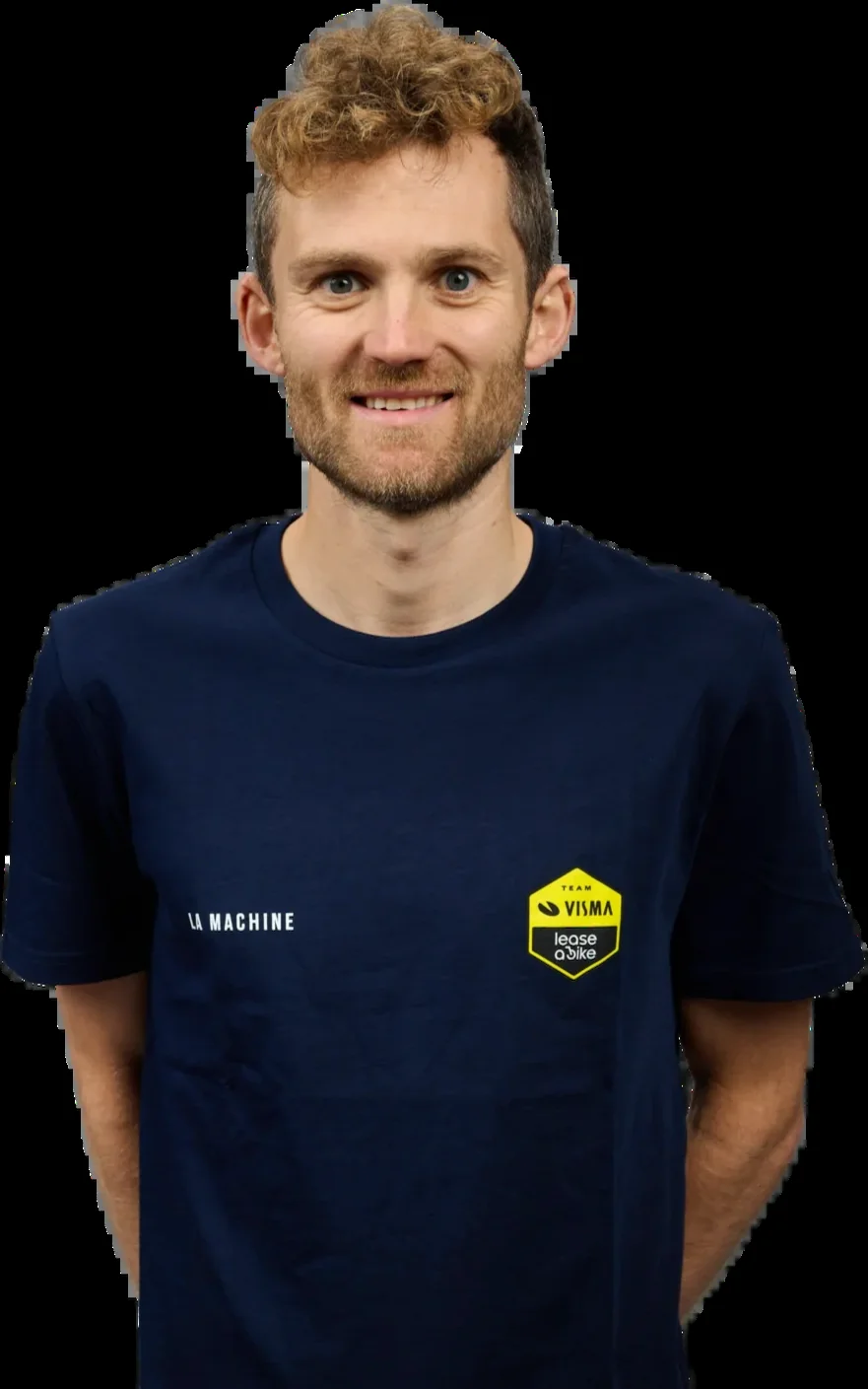
In this guide, we break down what CdA means, how to test it, and how to improve it — drawing on insights from Jamie Lowden, aerodynamics expert at Team Visma | Lease a Bike, one of the most successful professional cycling teams in the world.
What Is CdA and Why Does It Matter?
CdA stands for the product of your drag coefficient (Cd) and your frontal area (A). It is the single number that captures how aerodynamic you are on the bike.
- Cd describes how smoothly air flows around your body and equipment.
- A is the size of the "hole" you punch through the air, seen from the front.
A lower CdA means less aerodynamic drag at any given speed. For a typical road cyclist, CdA values range from roughly 0.32 m² (drops position) down to 0.20 m² (optimized time trial position). Even small reductions — 3 to 5% — can save minutes over 40 km.
The physics in brief
The drag force equation is:
F_drag = 0.5 x air density x CdA x velocity²
Because drag grows with the square of speed, aerodynamics becomes disproportionately important the faster you ride. At 40 km/h you need roughly twice the power to overcome air resistance compared to 30 km/h — not because you are 33% faster, but because drag scales exponentially.
Body Position vs. Equipment: Where the Gains Are
One of the key lessons Jamie Lowden shares from his work with WorldTour riders is this: your body accounts for approximately 80% of total aerodynamic drag. The bike and all its components — wheels, frame, helmet, clothing — make up the remaining 20%.
That has a clear practical implication: optimizing your riding position delivers far greater returns than upgrading equipment.
Position priorities
- Head and torso angle — Lowering your torso and tucking your head are the single biggest levers. A flat back reduces frontal area dramatically.
- Arm position — Narrow, low arms in the drops (or on aero bars) cut drag significantly.
- Knee tracking — Knees that flare outward create turbulence. A proper bike fit keeps them in line.
- Shoulder width — Narrower shoulders to the wind mean less frontal area, which is why TT bars are set as narrow as comfort and control allow.
Equipment priorities
After position is optimized, equipment choices matter most in this order:
- Helmet — An aero helmet is the single most cost-effective equipment upgrade, saving 5-15 watts at race speeds.
- Skinsuit — A well-fitting, textured skinsuit can save 5-10 watts versus a standard jersey and shorts.
- Wheels — Deep-section wheels reduce drag, though the benefit is smaller than most people assume (3-8 watts).
- Frame and cockpit — Gains here are real but incremental for most riders.
How to Test Your Aerodynamics
There are several established methods for measuring CdA, each with trade-offs between accuracy, cost, and accessibility.
Wind Tunnel Testing
The gold standard. You ride a stationary bike inside a controlled airflow environment while force sensors measure drag directly. Wind tunnels offer high repeatability and allow rapid A/B testing of positions and equipment. The downside: sessions cost several hundred to over a thousand euros, and tunnels are not available everywhere.
Velodrome Testing
Riding at constant speed on an indoor velodrome while measuring power allows CdA to be calculated. The controlled environment (no wind, smooth surface) provides reliable data at a fraction of wind tunnel cost. However, access to a velodrome is limited in many regions.
Outdoor Field Testing
Field tests use a power meter and speed data on a known course to estimate CdA through mathematical models. Tools like the Chung method compare measured power against predicted power to solve for CdA. Field testing is accessible to anyone with a power meter, but results are sensitive to wind and environmental conditions.
The A Faster You Aerotest
The A Faster You Aerotest brings aerodynamic testing to every cyclist — no wind tunnel or velodrome required. Using your own power meter and GPS data from a structured test protocol, the Aerotest calculates your CdA with high precision.
How it works:
- You ride a defined test protocol on a suitable road or track segment.
- Your power, speed, and environmental data are recorded.
- The A Faster You platform processes the data using validated aerodynamic models.
- You receive your CdA value along with actionable insights on how to improve.
The Aerotest makes it possible to test multiple positions and equipment configurations in a single session, track your CdA over time, and quantify the effect of every change you make.
Practical Tips to Improve Your Aerodynamics
Based on the principles above and Jamie Lowden's experience with professional riders, here are concrete steps you can take:
- Get a proper bike fit — Before chasing aero gains, make sure your position is sustainable. An aggressive position you cannot hold for the full race distance costs more than it saves.
- Lower your front end gradually — Experiment with stem spacers and stem length. Even 10 mm lower can reduce CdA measurably.
- Wear an aero helmet — The single cheapest speed gain available. Make sure it fits your head angle; a poorly fitted aero helmet can be slower than a road helmet.
- Invest in a skinsuit — For races and key events, a good skinsuit pays for itself in saved watts.
- Close your jersey — An unzipped jersey flapping in the wind is a significant drag source.
- Tuck on descents — Adopting an aero tuck on downhills is free speed with zero fitness cost.
- Test and measure — Subjective "feeling faster" is unreliable. Use the A Faster You Aerotest to quantify every change.
Insights from the WorldTour: Jamie Lowden and Visma Lease a Bike
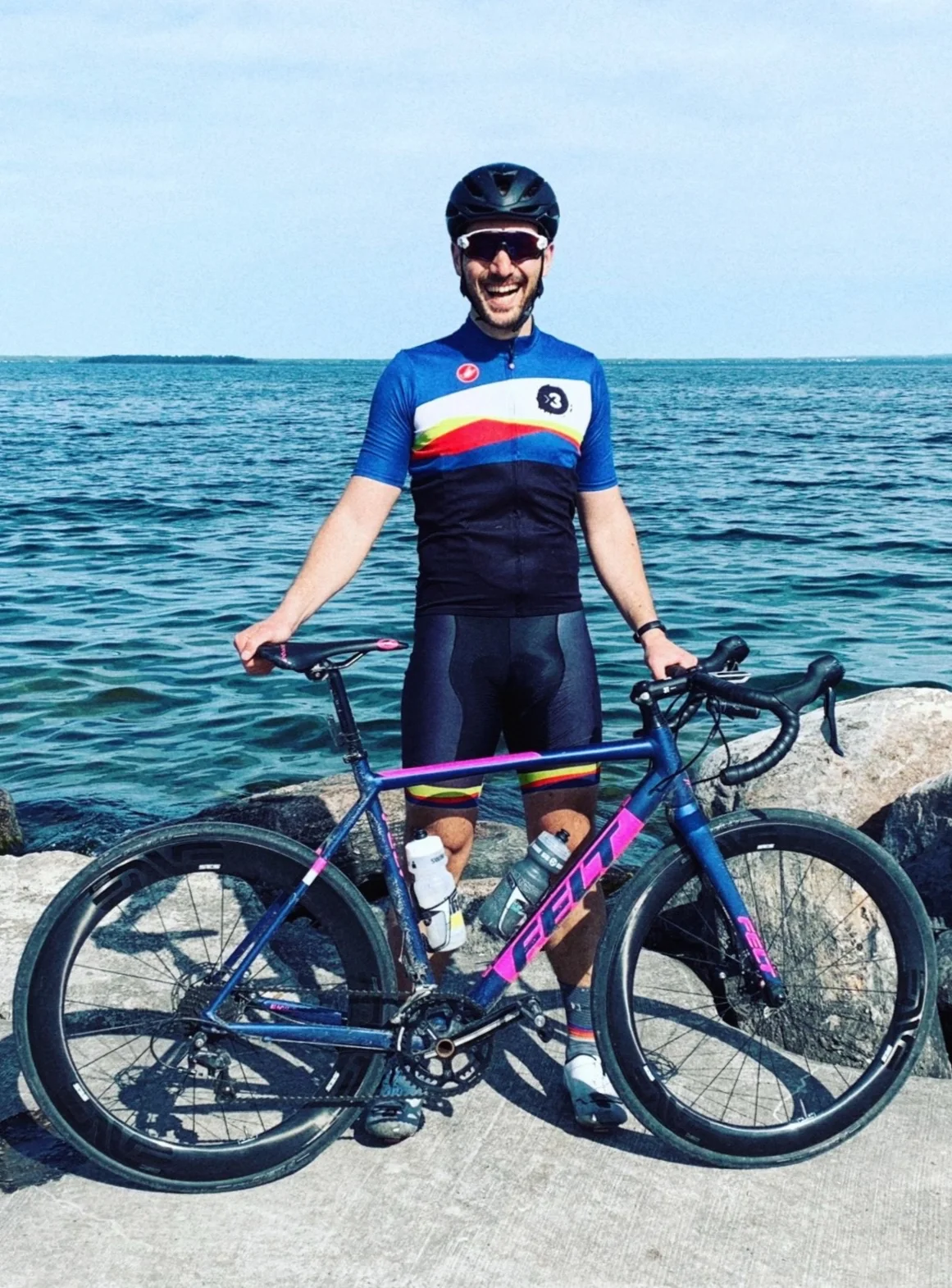
Jamie Lowden's role at Team Visma | Lease a Bike involves optimizing the aerodynamic setups of some of the best riders in the world. His work spans the full spectrum — from wind tunnel campaigns to race-day equipment choices.
Key takeaways from Jamie's expertise:
- Aerodynamics is iterative. WorldTour teams test continuously, not just once. Each race and course demands different trade-offs between aero, comfort, and power output.
- Small gains compound. A helmet that saves 5 watts, a position tweak that saves 3 watts, and a skinsuit that saves 5 watts add up to 13 watts — equivalent to months of fitness training.
- Data drives decisions. At the professional level, no equipment or position change is adopted without quantified evidence. Amateur cyclists can adopt the same approach using accessible tools like the A Faster You Aerotest.
The history of cycling aerodynamics runs from pioneers like Francesco Moser and Greg LeMond through the revolution driven by Team Sky to today's data-driven approach. What was once exclusive to professional teams is now available to every committed cyclist.
FAQ: Cycling Aerodynamics
Is aero testing worth it for amateur cyclists?
Absolutely. In fact, amateur cyclists often have more to gain from aerodynamic optimization than professionals, because their starting positions tend to be less refined. A typical amateur can save 15-30 watts through position and equipment changes — gains that would take many months of structured training to achieve through fitness alone. The A Faster You Aerotest makes professional-grade testing accessible at a fraction of the cost of wind tunnel sessions.
How much time can I save by improving my aerodynamics?
The savings depend on your speed, course, and starting CdA. As a rough guide:
- 10% CdA reduction at 35 km/h over 40 km saves approximately 2-3 minutes.
- For a 180 km road stage at WorldTour speeds, the same reduction translates to even larger absolute savings.
- Even a 5% improvement — achievable with a good aero helmet and position tweaks — can save over a minute in a 40 km time trial.
CdA vs. FTP: What matters more?
Both matter, but they work differently. FTP (Functional Threshold Power) determines how much power you can sustain. CdA determines how efficiently that power translates to speed. The critical insight is that aerodynamic gains are "free" — they do not cost energy or recovery, unlike increasing FTP. For time trials and flat races, a 5% CdA improvement often delivers more time savings than a 5% FTP increase. The optimal approach is to work on both simultaneously.
What is a good CdA value?
CdA values depend heavily on position and discipline:
| Position | Typical CdA Range |
|---|---|
| Upright / hoods | 0.35 - 0.40 m² |
| Drops position | 0.30 - 0.35 m² |
| Aero drops (tucked) | 0.27 - 0.32 m² |
| Time trial position | 0.20 - 0.26 m² |
| Elite TT (optimized) | 0.18 - 0.22 m² |
Start Measuring Your Aerodynamics Today
The biggest breakthroughs in cycling speed often come not from training harder, but from training smarter — and that includes understanding and optimizing your aerodynamics. Whether you are targeting a podium finish or a personal best, knowing your CdA is the first step.
Take the A Faster You Aerotest and discover how much faster you can be.
References: Martin, J.C. et al. (1998). Validation of a mathematical model for road cycling power. Journal of Applied Biomechanics. Defraeye, T. et al. (2010). Aerodynamic study of different cyclist positions. Journal of Biomechanics. Barry, N. et al. (2015). Aerodynamic drag interactions between cyclists. Journal of Wind Engineering.