Carb Tracking for Cyclists: Know What You Burn, Fuel What You Need
Carb Tracking for Cyclists: Know What You Burn, Fuel What You Need
You train. You track. You try to do everything right. But when it comes to nutrition on the bike, most cyclists are still guessing. How many carbs did you actually burn on that 3-hour ride? How much should you eat during a race? What happens if you under-fuel a hard interval session?
Without data, the answer is always: "I think..." With A Faster You's substrate tracking, the answer is exact.
The Problem: Guessing Your Nutrition
Most fueling advice is generic: "eat 60–90g carbs per hour during racing." But that number depends entirely on your intensity, your metabolism, and your power output. A rider burning 74g/h of carbs at 200W needs a completely different strategy than one burning 52g/h at the same power.
The consequences of getting it wrong:
- Under-fueling: You bonk. Glycogen runs out, power drops, the ride falls apart. This is the most common race-day mistake.
- Over-fueling: GI distress, bloating, wasted calories. Your stomach can only absorb so much.
- Wrong timing: Eating too late means the carbs aren't available when you need them. Eating too early can cause insulin spikes that temporarily impair fat oxidation.
What Carb Tracking Actually Shows You
A Faster You calculates your real-time carbohydrate and fat burn from your power data, based on your individual metabolic profile from the Powertest. This isn't a generic estimate — it's based on the Mader model of metabolic simulation, using your personal VO2max and VLamax values.
For every ride, you see: - Grams of carbs burned per hour at each power output - Grams of fat burned per hour at each power output - Total carbs and fat consumed over the entire ride - Where your crossover point is — the intensity where carb burn overtakes fat burn
Example: What 200W Really Costs
Take a typical trained cyclist at 200W steady-state. Based on their metabolic profile: - Carbohydrate burn: 74g/h - Fat burn: 47g/h - Total energy: ~690 kcal/h
Now increase to 250W: - Carbohydrate burn: 112g/h - Fat burn: 31g/h - Total energy: ~830 kcal/h
The shift is dramatic. At 250W, carb burn increases by 51% while fat burn drops by 34%. This is why pacing and fueling strategy must go hand in hand.
How A Faster You Calculates Substrate Burn
The calculations aren't based on rough estimates or generic formulas. A Faster You uses the Mader model — a physiological simulation of energy metabolism that accounts for:
- Your VO2max — maximum oxygen uptake capacity
- Your VLamax — maximum lactate production rate
- The interaction between both — which determines your crossover point, fat oxidation curve, and carb dependency at each intensity
Both values come from your Powertest results. The model then calculates exact substrate partitioning at every watt — from easy spinning to all-out efforts.
Practical Application: Race Fueling
Knowing your carb burn transforms race-day nutrition from guesswork to precision:
Before the race
Check your expected power and duration. If you'll ride at 220W for 4 hours, and your carb burn at 220W is 88g/h, you'll need approximately 352g of carbs during the race — plus pre-race glycogen loading.
During the race
Match intake to burn rate. If you burn 88g/h, aim to replace 60–80g/h (gut absorption limit for most athletes with training). The remaining deficit comes from glycogen stores.
After hard efforts
When you've depleted carb stores during a race or hard session, refueling within 30 minutes accelerates glycogen resynthesis. Your substrate data tells you exactly how deep the hole is.
For training rides
On easy Zone 2 rides where fat burn is dominant, you can fuel lighter and let your body use fat stores. On hard interval days, pre-load carbs and fuel during the session to maintain quality.
Why This Matters More Than You Think
Nutrition is the most undertrained aspect of cycling performance. You can have a perfect FTP, optimal training plan, and ideal body composition — but if you bonk at km 120 of a 160 km race because you under-fueled, none of it matters.
Substrate tracking closes the loop between training and nutrition. You stop guessing and start knowing: - How many carbs you need per hour at race pace - When to eat more and when to eat less - Which rides need fueling and which don't - How to taper nutrition alongside training load
Get Started
- Take the Powertest to establish your metabolic profile (VO2max, VLamax, substrate curves).
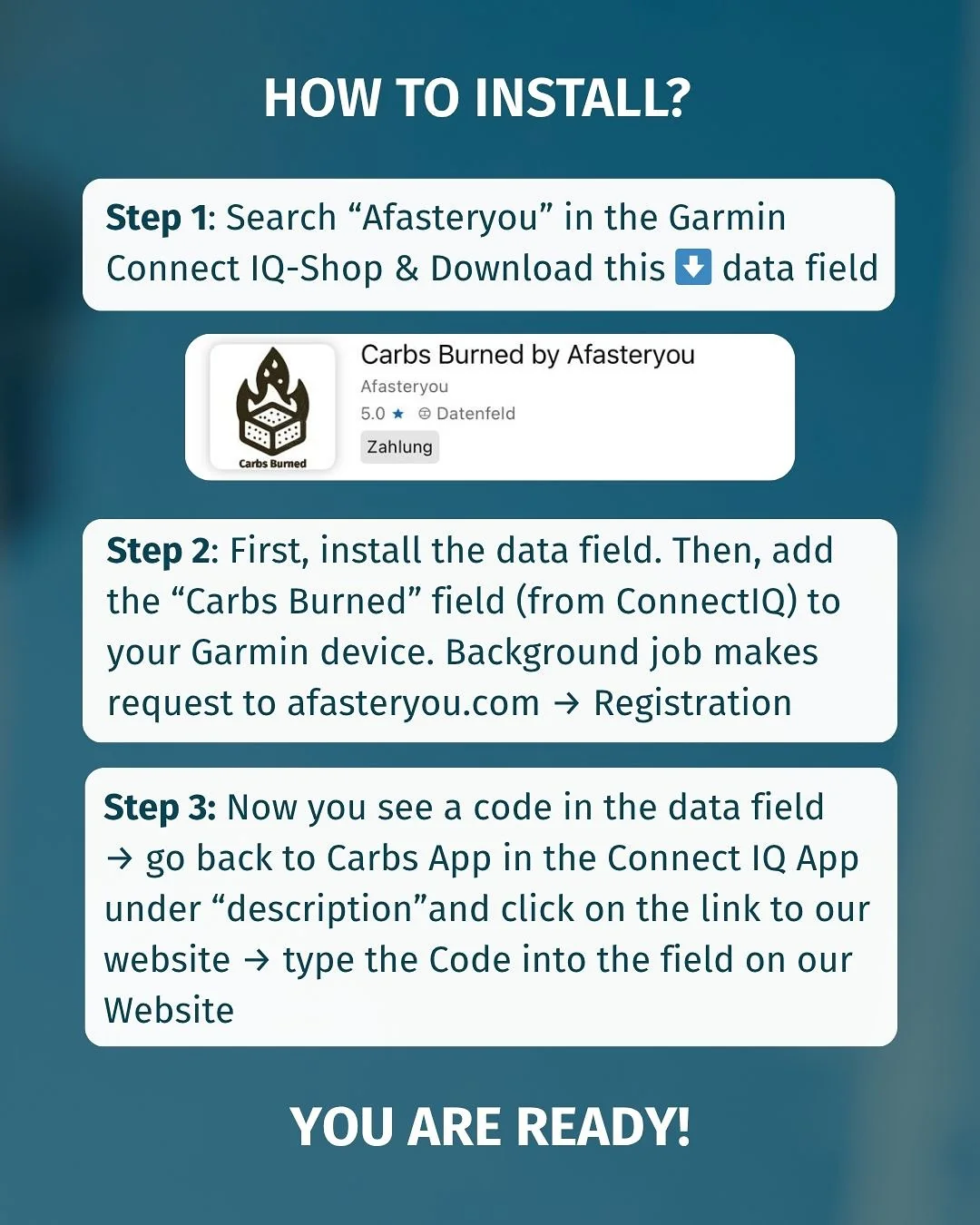
- Connect your rides — A Faster You calculates carb and fat burn for every activity automatically.
- Plan your fueling based on real data, not generic guidelines.
Stop guessing. Start fueling with precision. Create your free account and see exactly what your body burns.