AI Training Plan: Why Most Apps Get It Wrong (And What Real AI Looks Like)
Every training app claims to use AI now. But open the hood on most of them, and you'll find the same thing: if-then rules wearing an AI label.
Miss a workout → schedule shifts. Feeling tired → intensity drops. That's not intelligence. That's a spreadsheet with a marketing budget.
The Rule-Based Problem
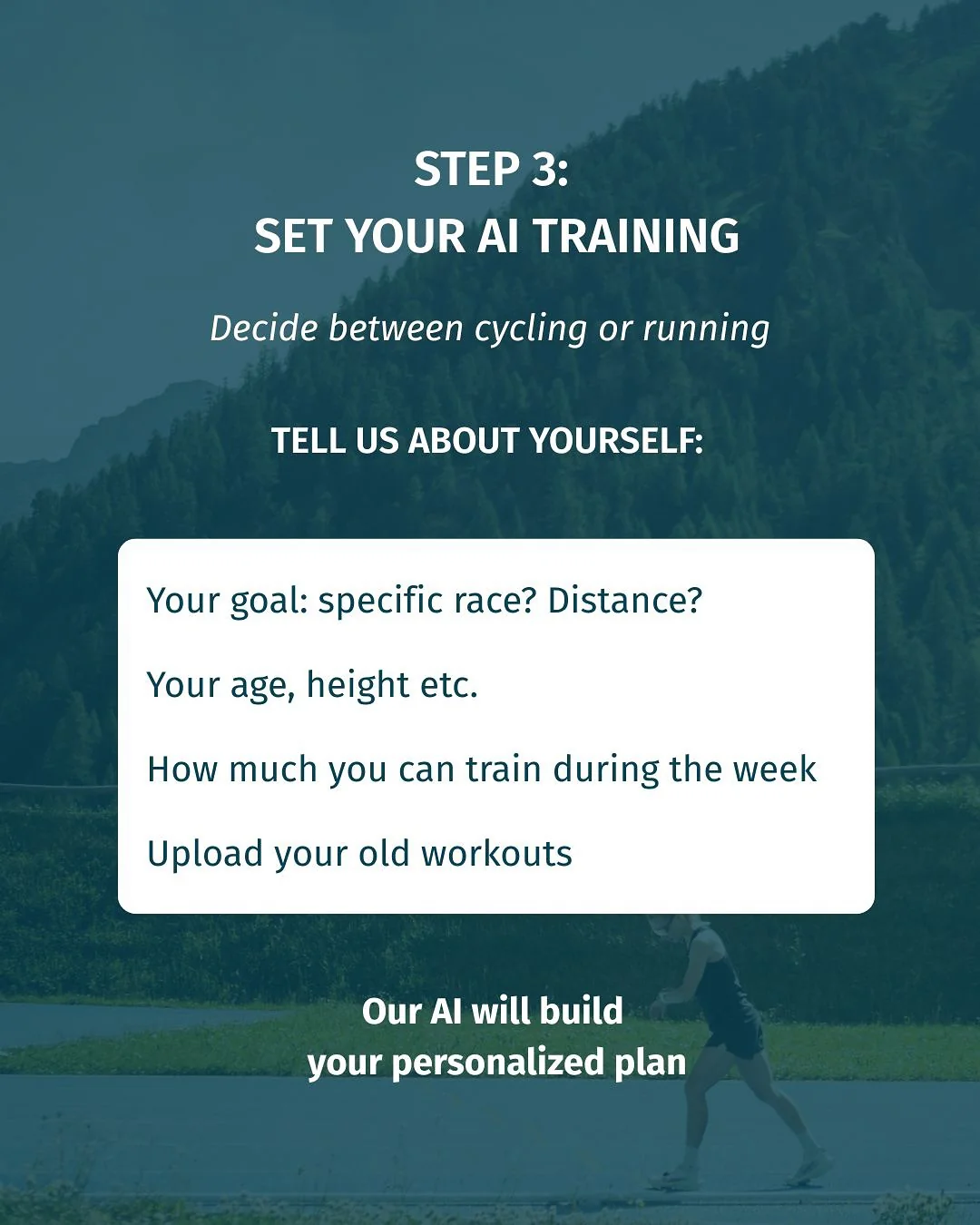
Most "AI training plans" work like this: 1. You enter a goal (e.g., marathon in October) 2. The app generates a plan from a template 3. If you miss a session, it shuffles the schedule 4. If you report fatigue, it reduces intensity 5. Every week it recalculates — based on whether you completed workouts, not on what actually happened physiologically
This is automation, not AI. The plan doesn't understand your metabolism. It doesn't know your VO2max or VLamax. It can't tell whether your threshold improved or your lactate production rate changed. It just checks boxes and moves workouts around.
The result: you get a plan that responds to compliance ("did you do the workout?") instead of adaptation ("did your body actually improve?").
What Real AI in Training Looks Like
Real AI-driven training requires three things most apps don't have:
1. A Physiological Model (Not Just Heart Rate Zones)
Most apps reduce your fitness to one number — FTP, a Garmin VO2max estimate, or a "fitness score." One number can't describe three energy systems.
A Faster You uses the Mader metabolic model, which describes your physiology through two key parameters: - VO2max — your aerobic ceiling, validated against lab measurements with <2% error - VLamax — your lactate production rate, determining your threshold and fuel efficiency
These two values interact. A high VLamax means you burn carbs fast — great for sprinting, terrible for marathons. When you train to lower VLamax, your VO2max often drops too. The Mader model explains why — and the training algorithms account for it.
This is fundamentally different from "take your FTP, multiply by percentages, call them zones."
2. Continuous Learning from Your Data
Every training session generates data. Real AI doesn't just check if you completed the workout — it analyzes what happened: - How did your power and heart rate behave? - Is your VO2max trending up or down? - How is your Body Reserve (accumulated fatigue)? - Did the training stimulus produce the expected adaptation?
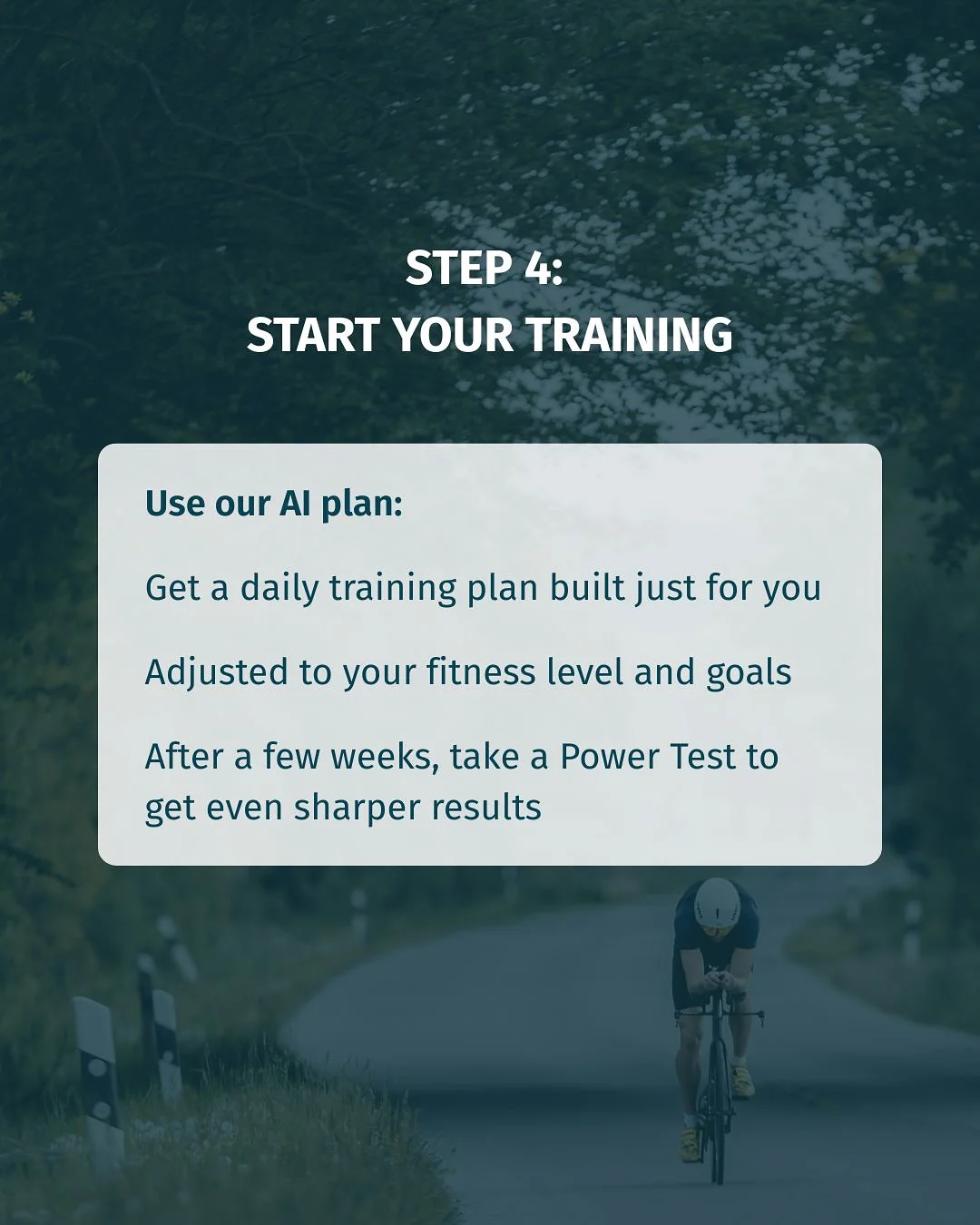
The A Faster You AI Prediction estimates your VO2max from every single activity — not just from formal tests. Your training plan adapts to what's actually happening in your body, not just to your calendar.
3. A Coach That Acts, Not Just Advises
The latest generation of AI in training goes beyond recommendations. The A Faster You Virtual Coach has 60 tools — it doesn't just read your data, it acts on it:
- You say "I'm sick" → it marks the days, your plan recalculates automatically
- You say "Move tomorrow's ride to Friday" → it swaps the sessions
- You say "I have a marathon in October" → it adds the race, adjusts periodization, sets tapering
- You say "How was my week?" → it pulls your actual data and gives a real analysis
This is tool-calling AI — the same architecture behind modern AI assistants, applied to sports coaching. The coach translates your natural language into precise platform actions.
Read the full story of how we built the Virtual Coach →
Five Things Real AI Does That Rule-Based Apps Can't
| Rule-Based App | A Faster You AI | |
|---|---|---|
| Zones | Generic (% of HRmax or FTP) | 9 metabolic zones from VO2max + VLamax |
| Periodization | Fixed template (base → build → peak) | Dynamic — adjusts based on VO2max/VLamax trends and race calendar |
| Recovery | "Rest after hard day" rule | Body Reserve tracking from 200K+ analyzed activities |
| Race Prediction | Pace calculator | Two-Limiter model (W' + carb depletion) based on your metabolic profile |
| Fueling | Generic "eat carbs" advice | Substrate partitioning — exact carb/fat burn per power zone |
Periodization: The Most Important Difference
Here's what most apps can't do: intelligent periodization of VO2max vs. VLamax.
Training VO2max and VLamax simultaneously doesn't work — they pull in opposite directions. Hard VO2max intervals raise your VLamax. VLamax-focused training lowers your VO2max. The art is knowing when to prioritize which.
A Faster You handles this automatically: - Far from race day: Build VO2max aggressively (30/30 intervals, high-intensity blocks) - Approaching race day: Shift to lowering VLamax (more Zone 2 volume, threshold work) - After the race: Rebuild VO2max for the next cycle
A rule-based app can't make this decision because it doesn't track both parameters.
The WhatsApp Factor
Here's something unexpected: the best training AI interface isn't an app. It's messaging.
The A Faster You Virtual Coach works on WhatsApp — same intelligence, same 60 tools, same data access. Send a voice message saying "I only have 45 minutes tomorrow, can you shorten the session?" and your plan adjusts. In seven languages.
Because that's how athletes actually talk to coaches. Not through dashboards and settings pages. Through conversations.
What AI Can't Replace
Honesty matters. Here's what AI coaching can't do (yet): - It can't analyze your running form or do movement analysis - It doesn't replace a doctor for injuries or medical questions - It can't assess mental readiness beyond what HRV and sleep data show - Sometimes it picks the wrong tool or asks one too many confirmation questions
The goal isn't to replace human coaches entirely. It's to give every athlete access to the kind of data-driven, responsive coaching that was previously reserved for professionals — at a fraction of the cost.
Try It Yourself
The difference between "AI marketing" and actual AI becomes obvious the moment you interact with it. Ask the coach "How was my last week?" and see what happens when AI meets real sports science.
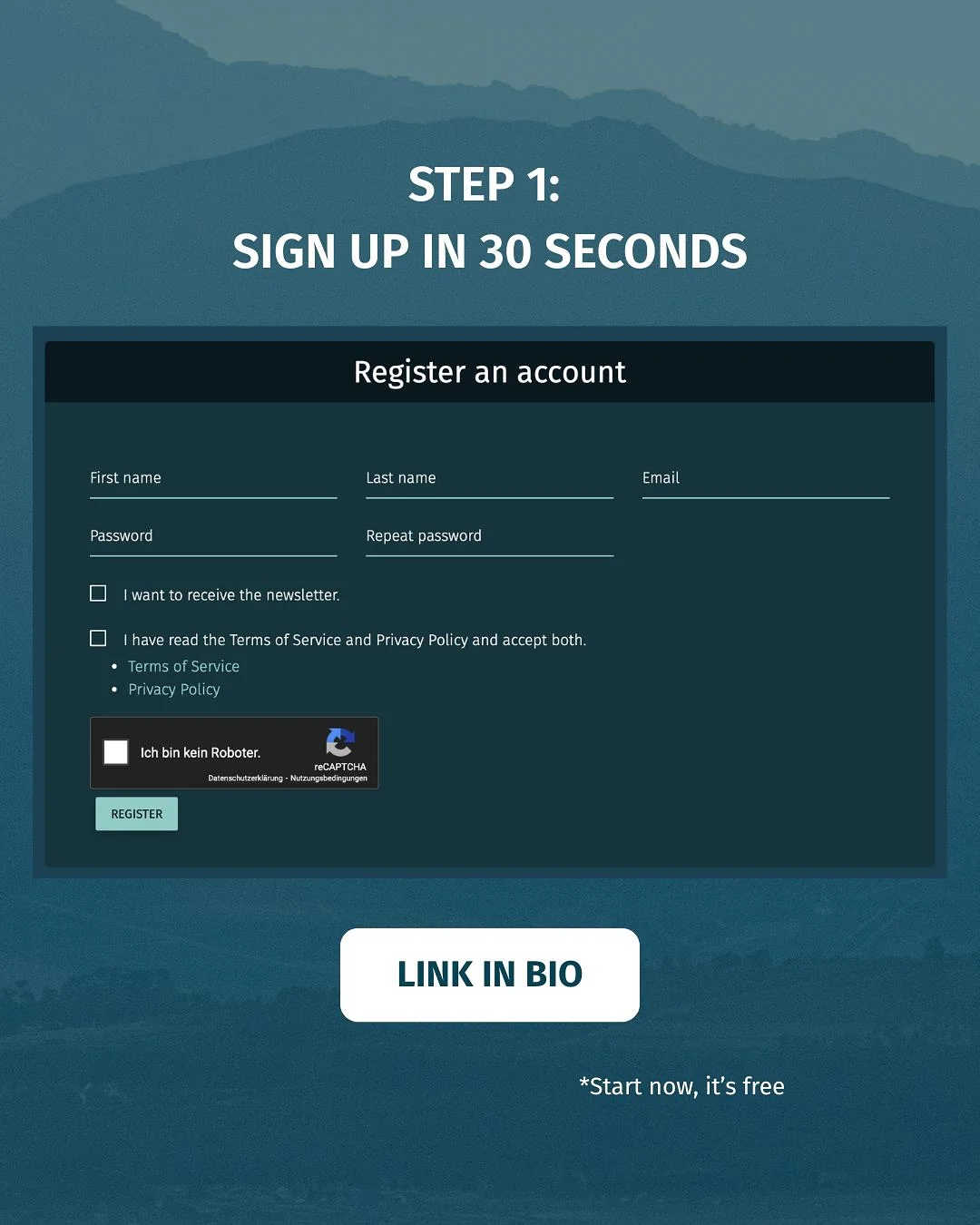
Start your free trial on A Faster You — the Powertest, AI training plan, and Virtual Coach are included.
FAQ
What makes A Faster You different from TrainerRoad, Garmin Coach, or Wahoo SYSTM? Those platforms use rule-based systems or simple adaptations. A Faster You uses the Mader metabolic model with two parameters (VO2max + VLamax), continuous AI predictions from every activity, and a tool-calling Virtual Coach with 60 actions. The training plan adapts to your metabolism, not just your schedule.
Do I need to do a Powertest first? Recommended but not required. The AI Prediction estimates your VO2max from your activities. A Powertest gives you both VO2max and VLamax for maximum precision.
Is the Virtual Coach available in my language? Yes — seven languages: English, German, French, Dutch, Spanish, Italian, Portuguese. Speak or write in any of them.
Does the AI just use ChatGPT? No. The training intelligence — the algorithms that build your plan, calculate zones, predict race times — are our own systems. The Virtual Coach uses an LLM as the language interface, but the sports science runs on our proprietary metabolic models and neural networks.
Training plans powered by the Mader metabolic model (Mader, 2003; Mader & Heck, 1986). Virtual Coach with 60 tool-calling capabilities. AI Prediction estimates VO2max from every training session.