Zwift FTP Test vs. Powertest: Cuando 300 W no son 300 W
Dos ciclistas terminan el Zwift Ramp Test con el mismo número: FTP 300 W. Uno está hecho para criteriums — cortos, brutales, sprint saliendo de las curvas. El otro vive para días de gravel de cinco horas con 3.000 metros de desnivel. Misma FTP, atletas opuestos.
Si les das el mismo plan de entrenamiento de 300 vatios, desperdiciarás a uno de ellos. El Zwift Ramp Test no puede diferenciarlos. Eso no es un error — es el límite de diseño de cualquier estimador de FTP de un solo número. La pregunta es qué sigue.
Esta es la comparación: los tests de FTP de Zwift vs. el A Faster You Powertest. Ambos corren en tu configuración normal de entrenador. Ambos terminan dentro de un solo recorrido. Responden dos preguntas diferentes.
Qué miden realmente los tests de FTP de Zwift
Zwift te ofrece tres protocolos, todos diseñados para llevarte a un número — tu Functional Threshold Power, los vatios que teóricamente puedes sostener durante una hora.
| Test | Duración | Factor de conversión | Qué te dice |
|---|---|---|---|
| Standard FTP Test | 45 min | 95 % del promedio de 20 min | Un número: FTP |
| Ramp Test | ~20 min | 75 % del último minuto completo | Un número: FTP |
| Ramp Test Lite | ~20 min | 75 % del último minuto completo (pasos más pequeños) | Un número: FTP |
Eso es todo. Terminas un test de FTP de Zwift con un único valor en vatios y una recategorización en Zwift Racing. El plan que construyes sobre ese número — intensidades de intervalos, límites de zona, cuánto volumen necesita tu semana — viene de reglas generales, no de nada que el test en sí haya medido.
Dónde son frágiles los tests de FTP de Zwift
El Ramp Test es la opción popular porque es corto y gamificado. También es el test para el que la comunidad de coaching ha pasado años escribiendo correcciones. Tres cosas que saber:
La conversión del 75 % no es universal. Surgió de debates en foros, no de un protocolo — y una revisión de CycleCoach de 2025 con más de 100 ciclistas encontró que el rango real cae entre 72 % y 77 % dependiendo del ciclista. Aplica el 75 % a un resultado de Ramp Test y normalmente estarás equivocado en 5–8 W en una dirección u otra.
Los sprinters obtienen FTPs infladas. Un ciclista con fuerte capacidad anaeróbica — piensa en ciclistas de pista, especialistas en criterium, cualquiera con cinco años de carreras en Zwift — puede mantener el último escalón de la rampa mucho más allá de donde su sistema aeróbico se ha agotado. El resultado: una FTP que se ve genial en papel y que no es sostenible en intervalos reales. La comunidad de coaching ciclístico es unánime en esto, y ZwiftInsider lo reconoce directamente.
El test de 20 minutos exige habilidad de ritmo. Es más preciso para ciclistas experimentados, pero premia al ciclista que ya ha realizado docenas de esfuerzos de 20 minutos a máxima potencia. Los principiantes o explotan a los 8 minutos o guardan energía los últimos cinco.
Nada de esto hace que los tests de Zwift sean malos. Producen un número utilizable para las categorías de Zwift Racing, para una estimación inicial de FTP y para seguir tendencias durante meses. No producen una prescripción de entrenamiento.
Qué mide un A Faster You Powertest que Zwift no puede
El A Faster You Powertest sigue el protocolo Mader. En una sesión — alrededor de 90 minutos incluyendo calentamiento y enfriamiento — completas tres esfuerzos cronometrados:
- 10 segundos, a tope — revela tu capacidad glucolítica (VLamax)
- Una rampa hasta el agotamiento — revela tu potencia aeróbica máxima (VO2max)
- Un contrarreloj de 12 minutos a máxima potencia sostenible — ancla tu umbral y tu potencia crítica
Combinado con tu peso corporal, grasa corporal y las ecuaciones de Mader, el sistema extrae cinco parámetros fisiológicos en un solo pase:
- VO2max — tu techo aeróbico (ml/min/kg)
- VLamax — tu tasa máxima de producción de lactato (mmol/l/s)
- Pcrit — tu potencia crítica, que aproxima la FTP para la mayoría de los ciclistas
- FATmax — los vatios donde la oxidación de grasa alcanza su pico
- Zonas de entrenamiento específicas para tu perfil metabólico, no una tabla de porcentajes copiada de otro ciclista
El esfuerzo de 12 minutos solo te lleva a un número que Zwift llamaría FTP. El sprint de 10 segundos más la rampa te llevan al motor que produjo ese número. Son datos diferentes sobre el mismo recorrido.
Misma FTP, atletas opuestos — el caso de estudio
Aquí hay dos perfiles reales de la plataforma A Faster You, ambos confirmados por Powertest. El umbral y el peso corporal coinciden. Todo lo demás no.
| Atleta | VO2max | VLamax | Pcrit (equivalente FTP) | FATmax | Hecho para |
|---|---|---|---|---|---|
| SPRINTER | 60 ml/min/kg | 0,80 mmol/l/s | 300 W | 200 W | Criteriums, ataques, escapadas |
| MARATHONA | 50 ml/min/kg | 0,20 mmol/l/s | 300 W | 225 W | Gran fondos, recorridos de 5h+, días de escalada |
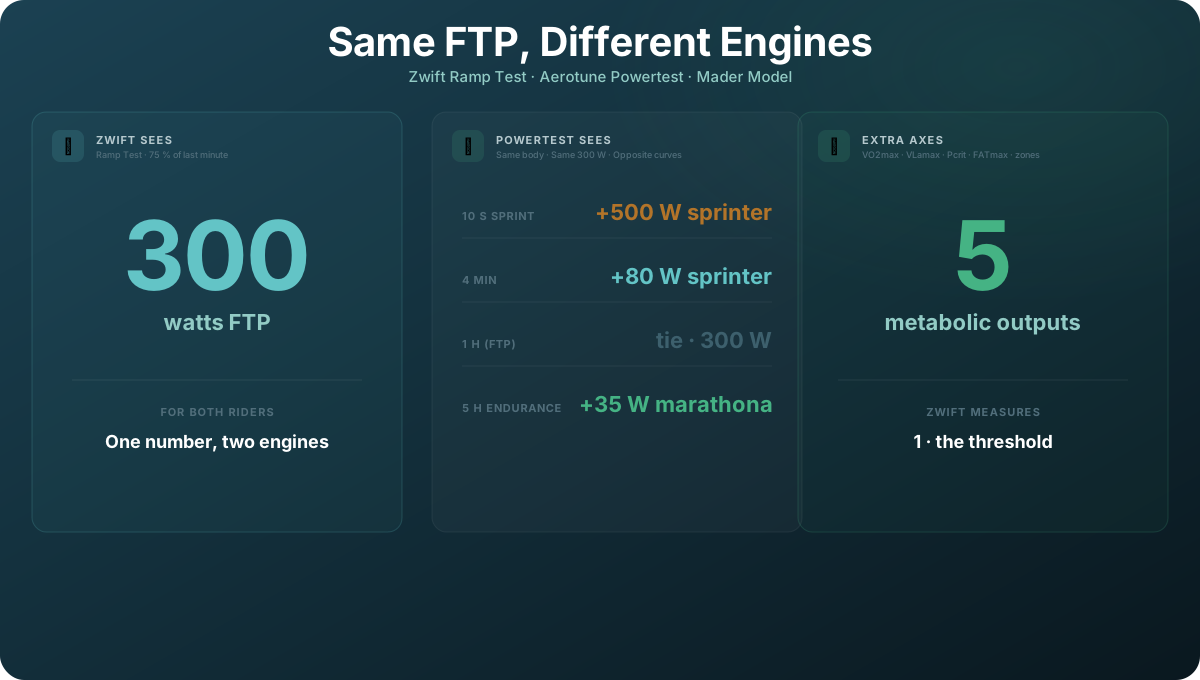
El Ramp Test de Zwift ve a ambos como 300 W. Sus curvas de potencia-duración — extraídas por el Powertest del mismo recorrido único — cuentan una historia completamente diferente:
| Duración del esfuerzo | SPRINTER | MARATHONA | Diferencia |
|---|---|---|---|
| 10 segundos | ~1.200 W | ~700 W | SPRINTER + 500 W |
| 4 minutos | ~410 W | ~330 W | SPRINTER + 80 W |
| 1 hora (FTP) | 300 W | 300 W | idénticos |
| 5 horas | 245 W | 280 W | MARATHONA + 35 W |
Los valores de potencia-duración son ilustrativos de los perfiles de muestra del A Faster You Powertest (manual del Powertest) — no son estadísticas poblacionales.
El cruce lo es todo. Por debajo de una hora, el Sprinter domina — eso es lo que compra la alta VLamax. Por encima de una hora, el panorama se invierte, porque la Marathona quema menos glucógeno por vatio y se adentra más en la oxidación de grasas antes de que el tanque empiece a vaciarse.
A sus respectivas intensidades FATmax — los vatios donde la quema de grasa se maximiza — la Marathona pedalea a 225 W usando solo 46 g/h de carbohidratos, mientras el Sprinter pedalea a 200 W usando 60 g/h. La misma sensación de esfuerzo, economía de combustible dramáticamente diferente.
Si entrenaras a estos dos ciclistas a partir de una única FTP de 300 vatios, le darías al Sprinter intervalos de VO2max que no alcanzan su techo (su techo real es 60 ml/min/kg, no los 50 ml/min/kg que asumirías solo desde la FTP), y le darías a la Marathona series de sprints que castigan su metabolismo para una adaptación que no puede mantener. Ambos entrenarían duro y mejorarían lentamente. El número de FTP no estaba equivocado — simplemente era la mitad de la historia.
Por qué esto importa para tu plan de entrenamiento
El mismo bloque de desarrollo de VO2max se ve estructuralmente diferente para los dos ciclistas. El Mader Model produce la prescripción automáticamente:
| Fase | SPRINTER (VLamax alta) | MARATHONA (VLamax baja) |
|---|---|---|
| Intervalos de VO2max | 95–100 % de la potencia de VO2max · 4 × 4 min | 88–95 % de la potencia de VO2max · 6 × 5 min |
| Trabajo en sweet-spot | Menos — VLamax ya es alta | Más — impulsa el aclaramiento de lactato |
| Horas de base / semana | Menor — alto costo de recuperación glucolítica | Mayor — el bloque de oxidación de grasa tolera el volumen |
| Ingesta de carbohidratos en recorridos largos | 60–80 g/h | 30–50 g/h tramos estilo ayuno |
Un plan de entrenamiento de 300 vatios que asume que ambos ciclistas comparten el mismo motor sobrecocinará al Sprinter en volumen y subcocinará a la Marathona en intensidad. Lo que comparten — el número de FTP — es lo menos relevante para el entrenamiento de ambos.
El Powertest corre automáticamente dentro de tu plan de entrenamiento
Si has conectado Zwift a tu plan de entrenamiento A Faster You (el walkthrough completo de sincronización cubre el flujo de 14 pantallas), no hay nada que configurar manualmente. Cuando tu plan llame a un Powertest, el entrenamiento se empuja solo a Zwift Companion. Tú lo recorres. La actividad completada fluye de vuelta. El análisis Mader corre automáticamente y tu perfil completo — VO2max, VLamax, Pcrit, FATmax y zonas — aterriza en tu dashboard en segundos. Sin descarga de archivos, sin carga de FIT, sin el truco de configurar la FTP. La integración maneja el mapeo de objetivos porcentuales en segundo plano.
El Powertest en sí es un único entrenamiento, recorrido en interiores o exteriores:
- 20 min de calentamiento a ritmo de conversación
- 10 segundos, a tope desde parado — la superficie VLamax
- 10 min de recuperación suave
- Rampa de 5–45 min — mujeres empiezan en 60 W, hombres en 80 W, +20 W cada minuto, hasta el agotamiento — la superficie VO2max
- 30 min de recuperación
- Contrarreloj de 12 min a máxima potencia sostenible — el ancla de umbral
- 10 min de enfriamiento
Tiempo total de recorrido: aproximadamente 90 minutos. Repite cada seis u ocho semanas. Cada test reajusta tus zonas, tus intervalos y tus objetivos de nutrición al motor que realmente tienes hoy.
Para atletas que prefieren piernas más frescas en cada esfuerzo hay una versión de dos días (rampa el día uno, contrarreloj el día dos), una versión al aire libre (sin rampa, 4 min + 12 min en su lugar) y una versión con toma de muestras de lactato que añade lecturas de lactato en sangre para una precisión de grado laboratorial. Las tres corren a través de la misma integración del plan de entrenamiento.
Qué es — y qué no es — el Ramp Test de Zwift
Un Zwift Ramp Test es un test de potencia aeróbica máxima multiplicado por 0,75. Produce un número utilizable si el ciclista está aproximadamente en el medio del rango de conversión del 72–77 % y tiene un perfil equilibrado de VO2max a VLamax. Para cualquiera fuera de ese perfil, el resultado es una extrapolación, no una medición.
Dónde el Ramp Test es la herramienta correcta:
- Clasificación de categoría en Zwift Racing — el matchmaking de Zwift compara números entre decenas de miles de ciclistas. Un ranking relativo de un protocolo estandarizado es exactamente lo que necesita la categorización; la precisión absoluta no importa a nivel de límite de categoría.
Dónde deja de ser suficiente:
- Como medición real de FTP. La Functional Threshold Power por su definición original es la mayor potencia que puedes mantener durante una hora. Solo hay dos formas de medirla realmente: montar durante una hora a tope, o construirla desde la fisiología subyacente (VO2max + VLamax a través del Mader Model). Cualquier extrapolación de 20 minutos con un factor de conversión fijo es una suposición — la comunidad de coaching ciclístico lleva más de una década escribiendo sobre esto. No puedes estimar la FTP con precisión sin medir la VLamax.
- Como base para la prescripción de entrenamiento individual. Dos ciclistas con el mismo número de Ramp Test pueden tener FTPs reales completamente diferentes, techos de VO2max completamente diferentes y respuestas completamente diferentes al mismo entrenamiento. Ese es el caso de estudio anterior.
El encuadre honesto: el Ramp Test responde "¿dónde estoy en el marcador de Zwift?". El Powertest responde "¿cuál es el umbral real de mi cuerpo, y qué intervalos lo moverán?". Preguntas diferentes, herramientas diferentes — pero si la pregunta es entrenamiento, solo una de ellas es la herramienta correcta.
El Powertest se suma a tu flujo de trabajo en Zwift — no lo reemplaza
Si ya montas en Zwift, el A Faster You Powertest no te pide que lo dejes. Pide 90 minutos una vez cada seis u ocho semanas, recorridos como un entrenamiento de Zwift, analizados automáticamente después. Las restantes cientos de horas de entrenamiento permanecen exactamente donde están — en Zwift, con tus entrenamientos A Faster You enviados a Companion (aquí está el walkthrough completo de sincronización).
El intercambio que cierra el Powertest: dejas de adivinar si tus intervalos prescritos están calibrados a tu fisiología real, y empiezas a montar intervalos que el Mader Model construyó específicamente para tu perfil de VO2max-VLamax.
Prueba el Powertest — incluido en tu prueba gratuita de 14 días
El A Faster You Powertest y el plan de entrenamiento con IA se desbloquean juntos. Conectar Zwift dentro del editor de plan de entrenamiento inicia una prueba Premium de 14 días — sin tarjeta de crédito — y tu primer Powertest puede recorrerse la misma semana. Después de la prueba decides si quedarte con Premium, pero el perfil metabólico que midas se queda con tu cuenta de todas formas.
Conecta Zwift y comienza tu primer Powertest →
Para el walkthrough completo de integración, consulta Cómo sincronizar tu plan de entrenamiento IA A Faster You con Zwift. Si quieres entender el lado de la VLamax del motor antes de hacer el test, VLamax explicado es la lectura previa recomendada.
FAQ
¿Es el A Faster You Powertest más preciso que el Zwift Ramp Test? Sí — y la diferencia es sistemática, no aleatoria. Para un ciclista con un perfil metabólico equilibrado, el Ramp Test se acerca a una FTP real. Para sprinters con alta VLamax, consistentemente sobreestima; para tipos de pura resistencia con baja VLamax, tiende a subestimar. Sin medir la VLamax no puedes saber en qué lado de ese rango estás, ni por cuánto. El Powertest mide la VLamax directamente, por lo que el umbral que reporta está anclado, no extrapolado — y además obtienes VO2max, VLamax y FATmax en el mismo recorrido.
¿Necesito un medidor de potencia o un entrenador inteligente? Sí — ambos tests necesitan vatios precisos. Cualquier entrenador compatible con Zwift que produzca datos de potencia funciona para el Powertest, exactamente igual que para el Ramp Test.
¿Con qué frecuencia debo hacer el retest? Cada seis u ocho semanas durante un bloque de entrenamiento. Ese es el ritmo al que un plan estructurado produce cambios metabólicos medibles, y es suficientemente frecuente para que el Mader Model pueda recalibrar tus zonas.
¿Puedo hacer ambos tests el mismo día? No — ambos son esfuerzos máximos y necesitan piernas frescas. La IA del plan de entrenamiento programa el Powertest con el espaciado apropiado respecto a otras sesiones duras, así que no necesitas planificarlo tú mismo.
¿El A Faster You Powertest reemplaza las pruebas de laboratorio? No del todo — el estándar de oro sigue siendo la espirometría de laboratorio más la toma de muestras de lactato en sangre. El Powertest te acerca a esos números en unos pocos puntos porcentuales usando solo tu entrenador y las ecuaciones de Mader. Para la mayoría de atletas amateur y muchos de élite, la precisión es más que suficiente; para centros de diagnóstico de rendimiento, A Faster You ofrece una versión con protocolo de lactato que integra lecturas de lactato en sangre.
¿Qué pasa si no tengo Zwift? El Powertest también corre en recorridos al aire libre, en Wahoo SYSTM, en TrainerRoad, en cualquier plataforma que grabe un archivo FIT. Zwift es simplemente el frontend más popular entre los ciclistas de interior, así que la integración está más desarrollada. El protocolo y el análisis son independientes de la plataforma.
Referencias del protocolo Mader: Mader (2003), European Journal of Applied Physiology; Mader & Heck (1986), International Journal of Sports Medicine. Concepto de Functional Threshold Power: Allen & Coggan, "Training and Racing with a Power Meter" (3.ª ed., 2019). Variabilidad de conversión del Ramp Test: CycleCoach (2025), Why Your Ramp Test FTP Feels Too High. Protocolos de test de FTP de Zwift: ZwiftInsider FTP Tests overview (2026). Datos de perfil de dos atletas: plataforma A Faster You Powertest, perfiles de muestra del manual del Powertest.